The General pathway combines core computing foundations with flexible optional choices at Level 5 to build a broad, employable computing profile.
Program Structure
Total:240 creditsGLH:960 hoursLevel 4:120 creditsLevel 5:120 creditsPearson-set:Core projects included
Level 4 (120 credits)
The General pathway at Level 4 includes 6 core units, 1 mandatory specialist unit, and 1 optional unit from the Level 4 optional unit bank.
| Unit | Unit Title | Credits | Level | Status |
|---|
| 1 | Programming | 15 | 4 | Core (Mandatory) |
| 2 | Networking | 15 | 4 | Core (Mandatory) |
| 3 | Professional Practice | 15 | 4 | Core (Mandatory) |
| 4 | Database Design & Development | 15 | 4 | Core (Mandatory) |
| 5 | Security | 15 | 4 | Core (Mandatory) |
| 6 | Planning a Computing Project (Pearson-set) | 15 | 4 | Core (Mandatory) |
| 7 | Software Development Lifecycles | 15 | 4 | Specialist (Mandatory) |
| Choose 1 | Level 4 Optional Unit Bank (choose ONE):
Optional Unit 11: Strategic Information Systems
Optional Unit 12: Management in the Digital Economy
Optional Unit 13: Website Design & Development
Optional Unit 14: Maths for Computing
Optional Unit 15: Fundamentals of Artificial Intelligence (AI) & Intelligent Systems | 15 | 4 | Optional (Choose 1) |
Level 5 (120 credits)
Level 5 includes two mandatory core units plus 75 credits from five optional units. Optional units should be selected to maintain a broad “General” profile (not replicating a specialist pathway).
| Unit | Unit Title | Credits | Level | Status |
|---|
| 16 | Computing Research Project (Pearson-set) | 30 | 5 | Core (Mandatory) |
| 17 | Business Process Support | 15 | 5 | Core (Mandatory) |
| Choose 5 | Optional Requirement: Select FIVE Level 5 optional units (total 75 credits) from the unit banks below. | 75 | 5 | Optional (Choose 5) |
Level 5 Optional Unit Bank
| Unit | Unit Title | Credits | Level |
|---|
| Optional Unit 33 | Applied Analytical Models | 15 | 5 |
| Optional Unit 34 | Analytical Methods | 15 | 5 |
| Optional Unit 35 | Systems Analysis & Design | 15 | 5 |
| Optional Unit 36 | User Experience & Interface Design | 15 | 5 |
| Optional Unit 37 | Architecture | 15 | 5 |
| Optional Unit 38 | Analytic Architecture Design | 15 | 5 |
| Optional Unit 39 | Network Management | 15 | 5 |
| Optional Unit 40 | Client/Server Computing Systems | 15 | 5 |
| Optional Unit 41 | Database Management Systems | 15 | 5 |
| Optional Unit 42 | Game Design Theory | 15 | 5 |
| Optional Unit 43 | Games Development | 15 | 5 |
| Optional Unit 44 | Games Engine & Scripting | 15 | 5 |
| Optional Unit 45 | Internet of Things | 15 | 5 |
| Optional Unit 46 | Robotics | 15 | 5 |
| Optional Unit 47 | Emerging Technologies | 15 | 5 |
| Optional Unit 48 | Virtual & Augmented Reality Development | 15 | 5 |
| Optional Unit 49 | Systems Integration | 15 | 5 |
| Optional Unit 50 | Operating Systems | 15 | 5 |
| Optional Unit 51 | E-Commerce & Strategy | 15 | 5 |
| Optional Unit 52 | Digital Sustainability | 15 | 5 |
| Optional Unit 53 | Digital Technology as a Catalyst for Change | 15 | 5 |
| Optional Unit 54 | Prototyping | 15 | 5 |
Specialist Level 5 Units (Available as Optional Choices for General)
Specialist units may be selected as optional units within the General pathway to add focus, with selection rules applied to keep the programme “General”.
| Group | Units | Credits | Level |
|---|
| Group A: Software Engineering | Optional Unit 18: Discrete Maths
Optional Unit 19: Data Structures & Algorithms
Optional Unit 20: Applied Programming and Design Principles | 15 each | 5 |
| Group B: Application Development and Testing | Optional Unit 21: Application Program Interfaces
Optional Unit 22: Application Development
Optional Unit 23: Risk Analysis & Systems Testing | 15 each | 5 |
| Group C: Data Analytics | Optional Unit 24: Advanced Programming for Data Analysis
Optional Unit 25: Machine Learning
Optional Unit 26: Big Data Analytics and Visualisation | 15 each | 5 |
| Group D: Network Engineering | Optional Unit 27: Transport Network Design
Optional Unit 28: Cloud Computing
Optional Unit 29: Network Security | 15 each | 5 |
| Group E: Cyber Security | Optional Unit 30: Applied Cryptography in the Cloud
Optional Unit 31: Forensics
Optional Unit 32: Information Security Management | 15 each | 5 |
The General pathway supports broad computing career routes—ideal for learners who want flexibility across multiple IT domains.
Career Opportunities
Graduates develop applied capability relevant to a range of computing and IT operations roles. Typical progression outcomes include:
- Software Developer / Junior Programmer
- IT Support Engineer / Systems Support
- Network Support / Junior Network Administrator
- Database Support / Junior Data Roles
- Security Support / Cyber Operations Assistant
- Digital Operations & Business Systems Support
Students aiming for deeper specialisation can use Level 5 optional units to build focus areas while maintaining a General award.
Tuition is clearly structured, with flexible payment options to support learners throughout the programme.
Cost
Level 5 Tuition Fee: 6000$
Installments available.
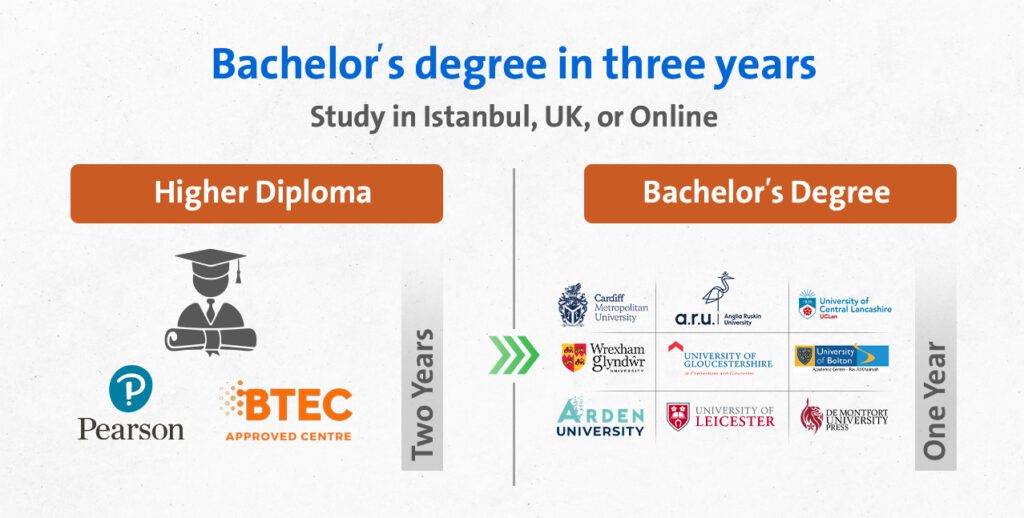
The HND is designed as a progression-ready undergraduate qualification—supporting final-year entry into top-up degrees and advanced study.
Academic Progression Pathway
After completing the Level 5 HND in Computing (General), learners commonly progress to:
- Level 6 top-up degrees (final-year entry) in Computing or related disciplines
- Specialist bachelor’s pathways aligned to software, networks, data, or cybersecurity
- Professional development routes and certifications aligned to career goals
Progression routes depend on university entry requirements and programme alignment.
Delivery is designed for international learners, with clear academic language support embedded in teaching and assessment practice.
Language of Delivery
This programme is delivered in English